Hold the Gate 3… A visit to Death Row.
As I walk out of my apartment at 03:30 in order to make the 6 hour drive up to a prison half way across the State to see a client, I pass nighttime revellers making their way into the take away joints, and wonder why I choose to drive a 12 hour round trip to spend 2 hours with a client when I could have spent the night in a bar and now be going home to bed. The answer is that my client is facing the death penalty and has not had a single visitor other than me for the past 4 years. His parents have died and his sister and her children decided to move out of State due to the death threats they received. He has been granted a resentencing hearing, this is his one chance of not having to go back to Death Row.
I’ve seen the tv documentaries and series depicting Death Row, and I have to say that’s not the Death Row that I see. When I arrive at the prison, which is in the middle of nowhere, I am searched and then searched again as though it is expected that I will have contraband on me and the corrections officers are so disappointed that they haven’t found it, that they search me again, just to prove a point. The reality is that I’ve been going into prisons for over 20 years, I will never have anything in my pockets, nothing round my neck or wrists, I will be wearing jeans and a long sleeve top, showing as little flesh as possible, and will carry a pad and pen. In high security prisons anything is a commodity, even a paper clip or an elastic band, or sneaker laces. The only commodity I have is me, and I hope that my client believes that I am a more valuable commodity working on his case that being held as a hostage!
When a Death Row inmate is moved, the whole prison is placed on lockdown, hence the other prisoners do not like the Death Row inmates. The corrections officer tells me that they are taking me over to Death Row as the conference room is busy. It’s the first time I have been to this prison and I assume that they are saying this to scare me. The reality is that, as I haven’t been to this death row before, I am desperate to see inside it and see what it’s like, and if it’s as bad as I’ve heard.
We walk through the prison wings, through one locked door after another, I am aware how empty the prison seems. Usually when I walk through prisons I come across inmates everywhere, polishing floors, pushing laundry carts, carrying boxes for staff. But today, as I’m being taken to Death Row, there is noone around, it seems eerie. It really is a lock down. No wonder the rest of the prison inmates don’t like the Death Row inmates.
We arrive at Death Row and I’m struck by the fact there are more corrections officers in this wing than anywhere else, but no inmates. They are all locked away behind cell doors. There is a table in the middle of the room and I’m told to sit there. It’s a very hot day outside and there is no aircon in this wing, Infact there is very little air in this wing. There are a couple of electric fans on the wall and the corrections officers have angled them down towards their chairs. To say it’s stifling in the wing is an understatement.
I notice that every other cell is empty, so that the inmates can’t even talk to the person next to them. I know from conversations with previous clients who have spent time on Death Row, that they are not allowed a colour TV, they can buy an overpriced black and white one which only shows the State run channels….that is the Government channel and a religious preaching channel. The inmates are locked up on their own for 24 hours a day, they usually get one hour of yard time a week, and that is usually in the yard on their own. They can have a couple of phone calls a month, but very few have anyone to call. There are no cats, or birds, wide screen TVs, communal areas, basketball matches.. These seem to exist only in tv documentaries. My client hasn’t had a hot meal since he arrived at Death Row as his food is driven over from the main wings, by the time it’s pushed though his door it is always cold. A few weeks ago his cell was searched and his mattress, sheet and pillow taken, he still doesn’t have them back. He is given postage stamps by the State, but isn’t allowed a pen or paper. His only book permitted is the Bible. Effectively Death Row sends my clients mad.
My client is brought out to the table, shackled at hands and feet, and round his waste. The hard cuffs on his wrists don’t even give him the flexibility to use a pen to sign the forms I have brought with me. I start to ask that my client is unshackled, but he gets very nervous and asks me not to make a scene. As I sit with him I am conscious of corrections officers walking past, much too close, as if to antagonise him, and they then start coughing and muttering things under their breath. So now I’m antagonised! I stand up and say “seems a lot of you in here have a cough, next one who disrespects me while I’m sitting with my client gets to walk the Green Mile to the Warden’s office, now get these cuffs off and move out of our personal space.”
The client looks stunned, the corrections officers stand rooted to the spot and then one comes over and says “he’s a killer, if he kills you, don’t come complaining to us.” The irony seems lost on him.
My client is unshackled and all the corrections officers move to the end of the room, obviously hoping that my client is going to come true on their warning. My client smiles and says ‘no one has ever fought for me before.”
We get to the end of the visit, the client hasn’t killed me, and I’ve ascertained that he went to Death Row aged 18 for a domestic killing. He shot someone who was beating on his mom. The problem was that he is black and the guy he shot was white, and the area they lived in still had segregation until the late 1970’s so at the time of his offence race issues were still prominent.
I could petition the Warden to get my client a mattress, sheet and pillow, pen and paper, but I know it will be of little use. Instead I submit the form I’ve just had my client sign.. The transfer form to get him moved to a jail closer to me so that I can work on his case. A jail that isn’t luxurious, but where he will at least be able to talk to other people.
Meanwhile, I have the unenviable task of trying to prepare a sentencing package for a 30 year old case in which the previous lawyer, who was not a criminal lawyer, didn’t turn up for the sentencing hearing as he was working on a private civil case, but in which the judge didn’t feel the client was sufficiently disadvantaged to postpone….
* I subsequently agreed a sentence of 40 years incarceration (with life probation) with the prosecutor… After all those years on Death Row, my client’s health is so bad I doubt he will make 58, but at least he has some hope, he has a prison job, and the State has been saved the exorbitant amount of money that it costs to keep an inmate on Death Row each year
Why is Middle England avoiding the fact that youths are dying every week at the hands of a youth and a blade?
Many readers won’t like my blunt approach but unless middle class parents in Middle England start to understand the harsh reality of knife crime, their sons and daughters are at risk. Knife crime is a problem and kids across the UK are dying from the blade. The usual comments to the press by a grieving parent is ‘They were a good child, with a great future ahead of them which has been cruelly taken away’. These are the youths who were talented footballers, or aspiring doctors, or just those who went out to a friend’s house for the evening and never came home.
The sad thing is that many of the deaths don’t even make the media anymore, just a common everyday occurrence, and for the majority of the public it is believed to be something which only happens in inner city estates between gangs. Well this is a naïve view. Anyone, anywhere can die or be seriously injured at the hands of someone with a knife.
Part of this naivety comes from the fact that the media doesn’t report it. Schools don’t want to tell the parents about the number of knives being found during knife sweeps in school grounds as they don’t want the parents to question the safety of their children while at school. Many police forces actively discourage any mention of knives being found and knife crime, for fear of the community complaining that the police are not protecting the community and making it safe. Some of the police officers who have the courage to promote their knife findings face criticism (and worse) from their superiors, for speaking out. Fortunately, I can speak out.
And not to overlabour the point, but while this problem is being kept in the shadows, kids are still dying. I know of at least 5 deaths of teenagers around the UK at the hands of the knife in August and September. Put that into perspective, in a class of 30 students, that’s one sixth of the class dead in the space of two months!
I work with kids who are involved in gangs and who carry knives. For them carrying a knife is for status, the gang requires them to carry a weapon, and it is for protection. These knives are usually not just a small blade – machetes, double serrated edge 15 inch blades and flick knives are regularly found by the police during searches of people and cars, at crime scenes and during weapons sweeps in public places. But these are not the only ones carrying knives, and it is the unknown and unsuspected ones who are most at risk.
There is a huge increase in youths carrying knives or blades as they feel the need to do so for their own protection. Youths who have never been in contact with the police before, who are doing well at school and who have a stable home life, but still feel the need to place a knife in their backpack. And these are also the youths who are dying at the end of their own blade, or who are sitting in a police cell for the first time having been found with a knife on them.
It is the parents of these youths who tell me that they had no idea their son or daughter was carrying a knife, and they can’t understand why. And they don’t like my answer which is that ‘it’s what youths do these days, carrying a knife is now commonplace‘. The sad thing is that we are usually having this discussion in a police station or courtroom, by which stage their son or daughter is facing a spell in a young offenders institution.
The question which comes next from most parents is ‘where did they get the knife?’
The answer to that is usually simple, either from the kitchen or from the internet. The first time knife carriers will probably have taken the knife from the kitchen drawer. It may have been noticed missing but the parents never think to question their son or daughter, why would they, they are a good kid. The progression is then to purchasing a knife on the internet, often using a parent’s Paypal account or credit card. A large gutting knife, with a double serrated edge, can be purchased for £9.99 on the internet. Less than £10 can take a life or ruin a life.
The next thing I hear is usually ‘but why didn’t the school warn us?’
Well, firstly it’s not the school’s responsibility to educate the parents, and I usually tell them so. And secondly, knives are not usually taken into the classroom. That would be too easy to detect. Knife sweeps of school grounds, gardens, drainpipes, hedges on the way to the school are all areas where knives are hidden for the day at school and then picked up on the way home, or left there for longer, with the youths safe in the knowledge that if they need to use it at school they know where to find it.
I regularly hear the comment ‘He/she didn’t have it at home because I would have known.’
Again that’s rubbish. Most youths are not even very sophisticated in their hiding places at home as they know that parents will not search their back pack or boxes under their bed. The more sophisticated ones will hide the knife in the places which are harder to spot, back of a Playstation, inside socks in a drawer, strapped underneath an outside window-ledge, or in the hedge in the side alley. But make no mistake, even an unsophisticated knife carrier can easily hide a knife if their parents have no idea that they should look for it.
Staying on the home front, it is also unlikely that many parents would understand their son or daughter was talking about a knife even if they overheard them on the phone or caught a glimpse of their internet chats. Common words for a knife or blade which are more readily known by parents include ‘Shiv’, ‘Shank’, ‘Switch’, ‘Blade’, ‘Sharp’, and ‘Dagger’. But the lesser known slang words include ‘Jammer’, ‘Ox’, ‘Hawk’, ‘Skeng’ ‘Wep’ and ‘Tool’. In a recent case, my client was a young lad arrested for possession of a knife after an off duty officer noticed the lad showing his knife off to his friends just outside the school grounds. I asked him why he had referred to the knife as ‘Skeng’ and he said he didn’t know but he’d looked up the slang words for knife on the internet, and ‘Skeng’ came up so he decided to use it so that his parents wouldn’t know what he was talking about and so that he could look good in front of his friends.
It’s not just young lads who are carrying knives, girls are increasingly carrying knives. The same reasons apply, for their protection and to look good in front of their friends. If their friends are carrying a knife, they don’t want to be the odd one out. The knives carried by girls are often smaller. My female clients have hidden a knife in their make up bag or in a box of sanitary towels. One commented to me that hiding a small folding blade in a bundle of sanitary towels is the easiest way to avoid detection as most teachers or parents won’t search them for fear of embarrassing the girl.
Some of the youths I represent in the youth court have found themselves on the periphery of a gang as they are easily led. These are often the youths who do not have a large circle of friends at school, are perhaps socially awkward or just want a bit of excitement. Gangs will quickly identify a youth who fits into these categories and use them. The youth may be encouraged to purchase one or more knives using their parent’s debit card or Paypal account. Websites may encourage purchases by offering 2 for 1 on knives, so it will not show up as a large amount on the debit card. The youth may be encouraged to hide the knife or carry it as they are not known to the police and will be less likely to be stopped. These youths are usually the least street wise and will hide the knife in their backpack or their locker at school, and will be the most likely to be caught. An excuse of “I was carrying the knife for someone else” is not a defence. The gang members won’t be facing court, but the duped youth will be facing custody.
The harsh reality of these youths carrying knives is that they are either likely to be killed or injured by their own knife or face custody. I hear many youths in the police station or court who now say “Oh, but I didn’t think the police were searching us anymore so I thought I wouldn’t get caught.” Wrong, stop and search is still being carried out by a lot of police officers, and there are other ways of being caught, the off duty officer who witnessed the knife being shown around, was picking his own daughter up from school. Knife sweeps at schools and in public areas are being carried out more frequently by the police and other authorities and a quick check on the school cctv can often identify who has hidden the knife behind the drainpipe or in the bushes at the back of the car park.
The Law on Knife Carrying
Anyone caught carrying a knife for the first time can receive a community or prison sentence. But under the Criminal Justice Act 1988, since July 2015 a youth over 16 who is guilty of carrying a knife in a public place on more than one occasion must be given at least 4 months’ Detention and Training Order, so that means the youth will serve at least 2 months in a young offenders institution and then at least 2 months under close supervision when they are released from custody. Anyone over 18 must be sentenced to at least 6 months in custody. This has created a two strikes rule in relation to carrying knives. Anyone caught with a knife for a second time will be locked up!
In reality, for many of the youths carrying knives, this could mean the end of aspirations of college, apprenticeship, or a job, for a moment of stupidity, by a youth trying to fit in with their mates or thinking that they will protect themselves from a gang attack by carrying a bread-knife!
So what can be done to combat this increase in knife carrying by those who have no previous contact with the police or courts? Parents and family members should speak to youths about knives, and the harsh reality. If a knife goes missing from the kitchen, question it. Listen out for the slang words, challenge a change in behaviour and increased secretism. Schools should be challenged about whether there is a knife problem, not just in school, but outside the grounds, are knife sweeps being carried out, if so what is being found? This will help to highlight the level of the danger to teenagers at that school.
Most police forces offer a knife amnesty bin, which provides a safe disposal of the knife with no questions asked. This should be used by parents who find a knife in their son or daughter’s possession, merely placing the knife elsewhere may result in the youth finding it and taking it back or giving it to their mate. Knife amnesty bins also help the police to gauge the amount of knives being carried in their area, and the types of knives.
Don’t ignore the knife crime problem. It sounds dramatic, but the harsh reality is that ignorance can cost a life.
Crystal Palace FC v Charlton Athletic FC Capital One Cup, Banned Fans & the Dispersal Zone
Following on from an announcement that the Metropolitan Police Service will put in place a dispersal zone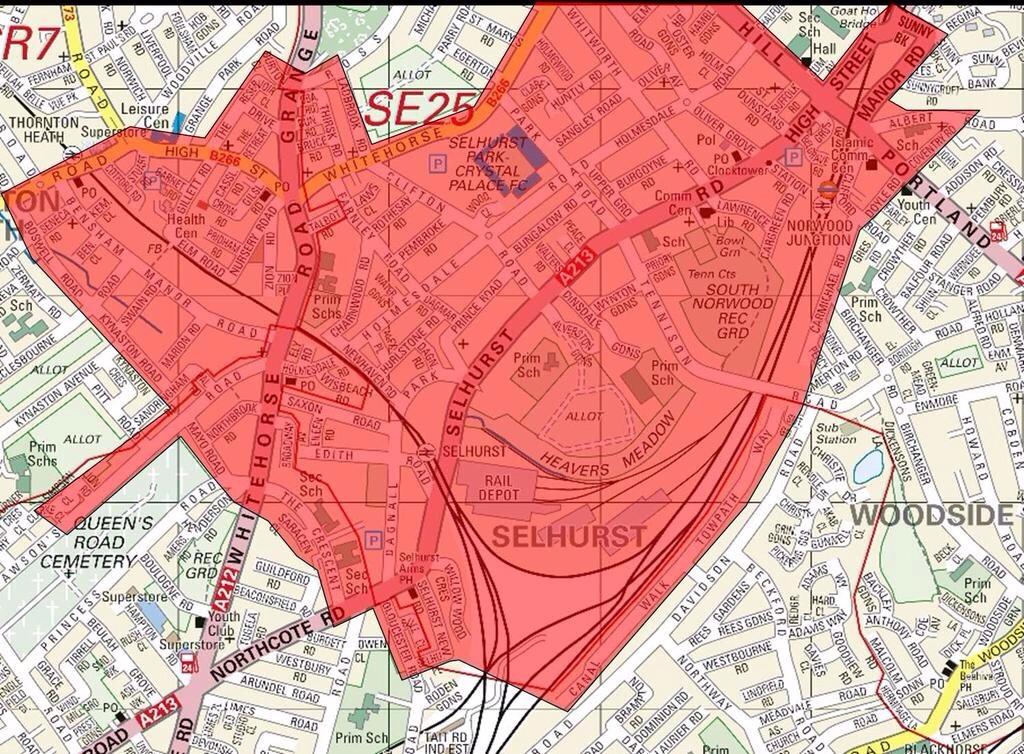 around Selhurst Park on 23rd September 2015 from 12:00 until 01:00 on 24th September 2015, I’ve had a few queries from fans who are on football banning orders and are Crystal Palace FC Fans or Charlton Athletic FC fans as to whether this applies to them. The answer is that the terms of a fan’s Football Banning Order are the terms which apply and the fan should comply with those terms as they usually do. If the dispersal zone falls into the area from which the fan is banned, then it does apply, but if the fan’s football banning order does not restrict them from part of the dispersal area they are not banned from it.
A dispersal zone is not a banned zone. For those interested in looking up the law, it comes from Section 35 of the Anti Social Behaviour, Crime and Policing Act 2014. This allows a police officer in uniform to direct a person in the dispersal zone to leave the zone (or part of it) and not to return for the period of time the dispersal zone is in place, in this case until after 01:00 on 24th September 2015. The police officer should only direct the person to leave it they have grounds to suspect that the behaviour of the person has contributed to or is likely to contribute to members of the public being harassed, alarmed or distressed, or contribute to crime or disorder.
The reality of this is that fans who will not be banned from the area unless they are spoken to by a police officer and served with a dispersal notice. Any fans who are given a dispersal notice, and who think they were given the notice unfairly, should keep hold of the written notice they are handed by the police and make contact with me and I will look into whether it was a valid dispersal. However, I anticipate that any fans who are setting off pyro (including bangers) in the streets within the dispersal zone, will be served with a dispersal notice, likewise anyone who appears drunk, or who appears to be goading fans. The mere fact that a fan does not have a ticket for the match does will not be sufficient to justify the issuing of a dispersal notice.
Any CPFC or CAFC fans who are on a football banning order and not sure of where they stand in relation to the dispersal zone, such as fans who live or work in the area, should contact me and I can make enquiries with the Metropolitan Police Football Unit on their behalf, but a dispersal zone being in place should not prevent a fan from going to work or college, or from going home.
A response to Constable Chaos’ blog post on Football Policing
Last week Twitter’s laughing policeman, Constable Chaos posted his own impressions on his day of football policing Football Crazy . I have reblogged this below. While I can’t dispute what he says, because I wasn’t with him, his experience doesn’t reflect mine, nor the majority of police officers I speak to and who police football matches.
Most of his gripes seem to relate more to the fact he had his rest day cancelled, had to get up early to provide mutual aid, ad by virtue of the fact he was providing mutual aid he wasn’t familiar with the town, and he didn’t get a very clear briefing from the Match Command. My response to that is, I feel sympathy for cops who are now facing this on a daily basis in all levels of their duty, but that is not the football fans’ fault. As the Twitter hash tag says #cutshaveconsequences
In reality, hundreds of thousands of fans travel across the country every week to watch their team play football. And these hundreds of thousands of fans are policed by a handful of police officers, compared to the number of police required most Friday and Saturday nights in towns up and down the country.
In a recent case in which I was involved, the UK Football Policing Unit provided a statement in an attempt to show how football fans are hooligans. The statement covered a 6 week period and included all Premier League and Football League games, as well as a cup game at Wembley. In those 6 weeks there had been 8 incidents of disorder. Sounds bad? More than 1 incident a week? But when cross examined, the Director of the UK Football Policing Unit had to accept that during those 6 weeks there would have been 260 sets of travelling fans, home and away, and that would have accounted for more than a million individuals travelling to a football match. The 8 incidents don’t quite sound so bad now, do they? If I was to ask just one large Metropolitan force how many incidents of disorder they had recorded on a pay day Friday, I’m guessing that the answer would be a lot more than 8.
The problem is not the travelling football fans, it’s the way they are treated by the media, and the Government ( which then trickles down to the police in their policy implementation). Most football matches are either totally police free or have a very low police presence. I attended a match a couple of weeks ago, one police serial (12 officers), 2 football spotters from each club, and a football intelligence officer and match commander were the only police in attendance. None of those officers lost their rest day, or were on mutual aid, and they managed to police over 10000 fans, without a single incidence of trouble. But that doesn’t make good media coverage.
At a match at the end of last season, fans ran on the pitch in celebration of the result. They were not fighting, or being disorderly, but actually doing the same as the much celebrated England fans in 1966. The next day the newspaper reports had headlines such as ‘Return to the Dark Days of Football’. I can just imagine the first draft of the report saying ‘jubilant fans celebrate their club’s success’ and the Editor deciding that the headline didn’t have enough punch.. ‘I know…. Let’s get the Dark Days of Football headline out again, that always sells papers’.
The Reading Chronicle was forced to apologise to Reading fans last year. It published an article which indicated that Reading fans were thugs and that football required policing, otherwise the hooliganism of the 1980s would return. So weak was the story, that they had to use an actor for the staged photo of a person in a Reading FC shirt, covering their face and holding a stick. It has to be questioned why the newspaper bothered to run the front page article in the first place as it wasn’t in relation to any football events in Reading, but why publish the truth when fiction sells more papers.
A ‘risk supporter’ is a term that was created by ACPO many years ago, and has stuck ever since. Its current definition is ‘A person, known or not, who can be regarded as posing a possible risk to public order or anti-social behaviour, whether planned or spontaneous, at or in connection with a football event.’ In reality this means that anyone travelling in a large group, anyone singing football songs, or anyone drinking in a pub before the match can easily fall into that description, despite the fact they never have been involved in any football related disorder and probably never will be. Compare this with the pay day Friday in town, by 11pm at least half of those in town will fall into the risk category if there was a ‘risk reveller’ category. The person who is staggering in the street, the couple having a drunken argument, the usual jostling in the kebab shop queue, the lad denied access to a club or bar who swears at the doorman, and the Hen Do group singing a bad rendition of Beyoncé on the top of the night bus. Giving football fans the title of risk supporter is nothing more than scaremongering.. It makes the public and the courts think that these fans must be ‘hooligans’ as otherwise they wouldn’t be called ‘risk’.
Football policing is a self perpetuating way for the police forces to make money from the football clubs, justify putting more cops on the beat on a Saturday or Sunday, and provide figures to the Home Office every year to justify the existence of police football units. In some areas the football stadium is way out of town, on a leisure park. The Kassam Stadium in Oxford is a good example of this. Thames Valley Police wanted to charge Oxford FC for extra policing resources to patrol the leisure park car park. This wasn’t due to football fans breaking into the cars, as they were all in the football stadium watching the football, but it did mean that TVP could provide a greater police presence for the family taking the kids to Frankie and Benny’s on a Saturday afternoon.
If the briefing by the Match Commander was poor, then that should be taken up with the Force. The match briefings I have been to, and I have been to many, do differ between forces, but should all include the main explanations of the main pubs which will take the fans, whether they are home or away, the areas the serials are tasked to cover, the incident number on which every incident from that day’s policing should be recorded, and whether there is any intelligence about potential disorder. I have experience of poor match briefings which have resulted in the police marching a group of, so called, Away risk supporters to a pub, and then refusing to let them leave despite the fact it was the designated Home supporters pub. Yes, someone screwed up there, but it wasn’t the football fans. And despite the fact the two groups of ‘risk’ were forced to stay in the same pub, and alcohol was being served, there was no trouble.
We all have different match day experiences, clearly Chaos had a chaotic experience, but that’s not the fault of the football fans, and they shouldn’t be vilified for choosing a game which ignites the passions of billions of people around the World in a way that no other sport can.
Football Crazy


It’s that time of year, now that’ summer’s in the air
When 22 wet gits, with their girly curly hair
Kick a ball about, for 90 minutes, sometimes more
And then cry to mummy, when they fall down on the floor
Ohh the rugby players, with their arms and legs all hanging off,
Laugh and call them names, cos a hair is out of place
They make millions each year but should get some proper jobs,
And a number of their fans are a bunch of smelly yobs.
(With apologies to any Spitting Image fans … ohh and any rugby fans who may be disgusted by the mere association  )
)
.
Yup peeps, it’s August, that time of year when schools have broken up for the summer holidays, families are excitingly taking their well earned vacations to places new and (hopefully) sunny, and you’ve just walked into your first early…
View original post 1,908 more words
Chelsea Fan? Did you go to PSGvCFC in feb 2015. You may be on video..
Were you in Paris in February 2015 for the PSG v Chelsea FC match?
Did you drink in Belushi’s (St Christopher’s Inn) before the match?
Were you part of the group walking to the Metro at Gare de Nord to catch the Metro to the Stadium?
Were you on the Metro train on which the incident too place?
Over the past two days the Metropolitan Police Service’s application for a football banning order against four Chelsea fans, following an incident in Paris in February 2015, has been heard in court. The judge has reserved judgment on the applications, and I do not intend, at this stage, to comment on the application or the incident in Paris.
This application has drawn media attention from around the World, and the press have made an application for all video footage shown during this case to be disclosed. The judge has said that he will make a decision next week on whether this video should be disclosed. I am pre-empting that decision incase the judge does decide to permit the press to have a copy of the video. Following a case in 2013 (which was not football related) the courts are expected to make available, to the press, copies of evidence aired in court unless there are good arguments against it.
The video has already been described by the press reporting during the two day hearing and it is clear that there are many Chelsea fans recorded on the video, their faces are clearly seen, and they will be identifiable by people who know these fans. Although the Metropolitan Police Service has not suggested that all those fans on the video are behaving disorderly, the press have already reported the fact that the Metropolitan Police Service has made much of the fact that fans did not disassociate themselves from the group, and that this was a large, intimidating group of Chelsea fans made up almost entirely of risk supporters.
I have concerns that if the video is released to the press, many Chelsea fans on the video may find that they are the subject of press scrutiny, or may find that their employers, family or friends question their involvement. Many fans may not even know that they are considered risk supporters by the police. With this in mind, I ask that Chelsea fans seriously consider any comments they make on social media over the next few days, particularly on open accounts which are easily identifiable, and which the press and employers can easily check. A comment or photo on social media can easily be misinterpreted or twisted, as was seen in some of the press reporting immediately following the incident in Paris.
If the video is disclosed, and any Chelsea fans have concerns about the fact they are identifiable on the video, please contact myself (@gurdena on Twitter; gurdena@btinternet.com) or Melanie Cooke (@cookemelanie on Twitter)
My Response to an MP’s request for Pro Bono Assistance for their Constituent…
Yesterday I sent out a tweet encouraging lawyers who receive letters from MPs asking for pro bono assistance for their constituents to refuse the work and remind the MPs of the reason for the increase in constituents having to approach their MPs for assistance. It seems I hit a nerve as I became a ‘Top Tweeter’ for the day…I’m sure the invite to the award ceremony and the plaque (or should I say plague) will follow in due course!
There has recently been media suggestion that MPs offices are at breaking point with the increase of constituents asking for legal assistance. Those of us who have worked in social justice for many years are aware of the cuts which have been made to legal funding over the past 10 years, but that since the Legal Aid Sentencing and Punishment of Offenders Act 2012 came into force the system has been at breaking point. Families facing eviction from their homes, workers being paid less than the minimum wage and who wish to bring a claim in the employment tribunal, mothers and fathers fighting for access to their children, are just a few examples of those who are now having to try and negotiate the complex court systems themselves or try and find a law centre where the doors are still open.
My recent experience of cases which I have undertaken pro bono, and which previously had MP involvement is that the claimant has suffered at the hands of an unqualified inexperienced MP or their assistant, such as a constituent providing a copy of the legal advice they had received pro bono to their MP, only to find that the MP sent a letter to the organisation the constituent wished to bring a claim against, and included the legally privileged advice! Other examples are poor advice on the deadlines for submitting a claim so that by the time the constituent submitted the claim form, their claim was out of time, or advice to claim against the wrong person resulting in high wasted costs to the constituent. My general experience of dealing with the MP’s offices are that they are rude, demanding, and have no appreciation for the fact that I also have other clients and that the time I use to undertake pro bono work is actually precious as I try to use it to help as many people as possible, and not to repeatedly send responses to the MP to massage his or her ego.
Hence, I made the decision a while ago that I would not undertake pro bono work for anyone referred from an MP’s office and instead I send back this standard letter. I am happy for anyone reading this to copy this letter and use it.
”
Rt Hon…..
I acknowledge receipt of your unsolicited letter requesting pro bono assistance for a member of your constituency.
Unfortunately, as I am sure you are aware, both the criminal justice system and the social justice system has suffered scathing legal aid cuts, and in my experience both are at breaking point and only being held together by the goodwill of lawyers and legal caseworkers who undertake pro bono work.
It is a sad reflection on both the Government and the Shadow Government that the invaluable Law Centres and legal centres have seen their funding cut to such a level that, for those which have not been forced to close, they are now unable to assist anywhere near the number of clients who are approaching them for help.
I undertake a very high amount of pro bono work, but have made the decision to support the law centres/advice clinics, Bar Pro Bono Unit, FRU and other charities I endorse, as I consider these to be the most needy, and without the back office support that the privilege of being a Member of Parliament brings.
Hence, I will not be able to assist your constituent in a pro bono capacity. Can I suggest that to best serve your constituents with their legal queries, you make efforts to try and rectify some of the damage that has been done to the social justice system over the past 4 years, afterall it is the power that as a Member of Parliament, you hold in your hands, and a power that us lawyers who are at the coalface cannot wield.
Yours sincerely ”
June 2015 Travel Restrictions on Anyone on Football Banning Order and the Power Struggle of the UK Football Policing Unit
Once again, its coming up to time when football fans in England who are on a football banning order are placed under a restriction of their liberty for no other reason than the National team are playing overseas.
There are two matches coming up, the Ireland v England friendly match on 7th June 2015 and the Euro 2016 qualifier Slovenia v England on 14th June 2015. What this means for fans on a football banning order is that they have to hand in their passports to the police on 2nd or 3rd June 2015, and also have to report to their designated police station between 10am and 1pm on 7th June 2015. Just when that reporting period ends, the next one starts. Fans have to hand in their passports to the police on 9th or 10th June and they can’t be collected until after the match on 14th June 2015.
For many fans, unless they have plans to travel between the 2nd and 15th June 2015, it is probably an easier deal to just leave their passports at the police station until after the 15th June. However, this is a huge restriction on their liberty.
An even bigger restriction on a fan’s personal life and freedom of movement is the reporting restriction on 7th June 2015. The reason the UK Football Policing Unit has put these restrictions in place is because it is possible to travel to Ireland on a driving licence, and the legislation does not permit the UKFPU to require a fan to hand in their driving licence. But let’s face it, fans who are on the police radar will be spotted at the airport or port anyway as they are well known to the football officers, who will be loitering around at all major airports and ferry terminals.
It is questionable whether this isn’t just the UK Football Policing Unit asserting its authority. An authority which has always kept itself below the radar. As a lawyer dealing with football fan cases, it has become increasingly difficult to deal with the UKFPU. It will not engage in communications about fans’ bans, and rarely responds to queries. So why has it suddenly decided to poke its head above the parapet. Call me a cynic but suddenly articles written by the UKFPU are being published in the media, and the newspapers are being fed stories which are are being printed to try and persuade the public that football hooliganism is on the increase and that if we are not careful it will go back to the ‘Dark Days’. This is nothing more than UKFPU spin, the Home Office statistics for the past few years have shown that incidents of football violence are low, compare that to incidents of violence on a Friday and Saturday night in the town centers around England.
It’s a shame that the UKFPU doesn’t think about the impact its reporting restrictions are having on those fans who work on Sundays, who usually take their kids swimming on Sunday morning, or who had plans to take the family away for the weekend. And the reality is that, in certain areas of the country a fan can sign on just after 10am and still catch a flight to Dublin in time for kick off, or shortly after. This reporting restriction will achieve nothing in relation to those fans (if there are indeed any) who are determined to go to Ireland and cause trouble, but will no doubt give the UKFPU some extra brownie points when it is applying to the Government for its next round of funding so that its staff can travel around the World promoting the UKFPU. Why let the right of movement of hardworking fans get in the way of that?
————–
Just to clarify, if you are on a football banning order, you must hand in your passport to the police on 2nd or 3rd June 2015 and report to your designated police station between 10am and 1pm on 7th June. You can collect your passport on 8th June 2015, but you must hand it in on the 9th or 10th June 2015 for the next control period, and cannot collect until 15th June 2015.
If you do not see the football officer when you hand in your passport or you report, always make sure you get a receipt to say that you have attended, even if it is just a handwritten note signed by the officer you have spoken to, and the time and date.
_______________
Hitting the Real Life Murder Scene & Trying to Keep the Client From Death Row
My mum had high hopes for me as a lawyer, but it turns out, I only like the dirty gritty edgy stuff that brings me into contact with the worse crimes that you can imagine. The kid found in a suitcase in the canal, the torture of a gang member and anyone who just happened to be a member of their family, the tourist abducted from the beach during a night time stroll and buried alive. Yet I also see those who are accused of the crimes, the lives they have lived, and still live, and I also have at the forefront of my mind the fact that they might, just might, be innocent. I’m a defense lawyer trying to keep those charged with the most heinous crimes from Death Row.
Standing in a street which was the scene of a drive by shooting two days earlier, I count the number of bullet holes in the building opposite, and then notice that the cars in the neighboring yards are also riddled with bullet holes and that the 2 inch thick metal fence posts didn’t fare a lot better. Meanwhile cars with blackened windows cruise past very slowly, and I’m conscious that if the window rolls down and there is an automatic weapon on the other side, those holes aren’t just going to be in a fence post and house brick.
So why am I here? It’s a crime scene and my client is charged with murder, it’s as simple as that. I want to look at the crime scene, get a feel for it myself, speak to the neighbors – if any will speak to me – I’m a middle aged white woman in a predominantly black poor neighborhood. Some call it the ghetto, but its not, there are good, hard working decent people living here, they would like to move but are unable to, they are in hock to the bank for their houses and no one is going to buy a house from them with the added selling pitch of MP5 bullet holes. Instead they have to hope that their son coming home from school at 5pm isn’t the next innocent victim of gang turf wars that have spilled over to these streets in recent years.
I don’t have the back up that the cops have when they visit these areas, I don’t have a firearm, or a radio to call for back up. To advertise the fact that I’m not a cop, I often show a lot more flesh than I usually think appropriate for a defense lawyer at work, tight cropped jeans so that its clear I don’t have a firearm strapped to my legs, bare hips and small of my back, showing there is nothing concealed in my waistband, and a Public Defender tag around my neck. It’s as good as a sign on my head “Yes I know I’m way out of my depth on these streets but I’m not a cop or looking to buy drugs”. In reality my best asset is my English accent, its very rare for a person not to respond to me when I ask to speak to them.. there is always that curiosity, it might come in the form of “I love your accent, where are you from?” or “hey Bitch where you from, that ain’t no Hood accent”. To me it doesn’t matter so long as it gets people talking, as that what I’m there to do. Many of the people in these streets will have refused to speak to the police, or to provide statements, but they may be prepared to talk to me. A street of 20 houses, at least 10 of them hit by stray gunfire, and when the police attended, no one heard a thing, apparently they were all asleep. I can usually find at least one or two who were not quite so asleep after all, and then there is always the local gossip who may actually hold a fair amount of truth.
I take photos of the scene on my iPhone, locations and lighting, where cars would have likely been parked, lines of sight for the neighboring and opposite houses. I’m not a crime scene investigator, but I have a good eye for a crime scene and will pass all my information back to the defense investigators and tell them what I want them to look for, what reconstructions I want. If it was a night time shooting then I’m sorry but I need an investigator to go back at night time. A day time photo or an ariel shot from Google Earth isn’t going to cut it with me.
I will often go back with the investigators to show them what I want. In the past I’ve borrowed cars to carry out reconstructions using the exact same car the police were sitting in to show that they could not have seen what they say they saw from inside the vehicle. I’ve asked cops to interrupt their lunch to get down on their knees in the middle of the diner and pull a weapon to show me whether it can be done the way my client has said it happened, and I’ve visited snitches in jail to tell them that so long as they keep out of my client’s way they should be ok as I’ve told my client that if the snitch dies, they too are going to face the same grim reaper that they have tattooed on their arm!
I am sure many of you are thinking that this is the stuff of Hollywood and doesn’t happen in real life, and that’s right, many lawyers don’t do anything more than meet their client at court and speak to them occasionally on the phone. But that’s not me, I need to get into the mind of my client and their life, and because of this I have ensured that most of my clients don’t go to Death Row and with those who do I can say I have tried.
Next stop is the local liquor store as these are often the focal point for these neighborhoods. As I walk up to the liquor store with its blacked out windows I’m never quite sure what to expect inside, but it is the usual, the clerk and all the alcohol behind bulletproof glass, money passed through a small gap where the glass meets the counter, a big metal pull out tray under the counter where the alcohol is delivered after payment is made. The only stuff on show are a few cans of coke in a side fridge. I grab a coke and join the queue, which parts for me to go to the front. I’m not from round here, they want to know why I’m there and possibly get me out as soon as possible. My problem is that I don’t want to go first, I want to talk to the clerk when he’s on his own. As soon as I walked into this store I realized that my client wouldn’t have walked into this store to jack it, the bullet proof glass, with American Rifle Association stickers all over it, gave it away that it’s not quite an easy target, so the other option is that he or those with him, were in here to buy a firearm. I explain to the clerk who I am and tell him that I am confused as to why my client went into the store that evening as surveillance footage shows that he didn’t exit with any liquor, was it perhaps that they card everyone, and my client didn’t have ID? The clerk completely ignores me.. oh well that’s a bust then. Two guys behind me snigger as though they can’t believe I am naïve enough to think that this liquor store cards all its customers. As I walk past them I mutter “or is it that he wanted something else that went in his waistband?”
By the time I exit the liquor store there are kids circling on bikes “hey lady, you been asking questions in my neighborhood?” It’s amazing how a 12 year old kid can create such an intimidating atmosphere, but my clients over the years have taught me ….don’t back down, don’t show a sign of weakness, you might still get shot or beaten but its less likely ..jeez thanks. So I don’t back down I walk up to the kids, I hand them all one of my cards, and they let me walk off. As I drive out of the parking lot, one of them circles up to my car, and gives me a name…it might come to nothing or it might be the breakthrough in my case. My client’s life might actually be saved by a 12 year old riding a bike!
 alisongurden